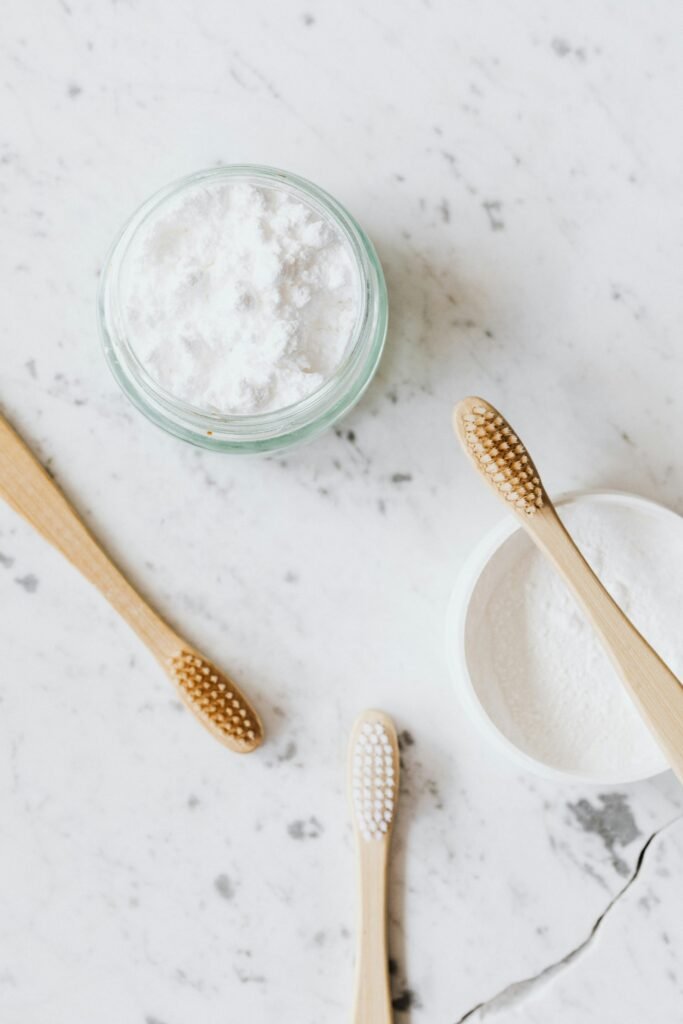
Glow Naturally: A Non-Toxic Oral Care Routine for Radiant Teeth & Gums
Intro:
Most of us grew up thinking a minty burn and foamy paste meant clean teeth. But many popular oral care products are loaded with toxins—fluoride, sodium lauryl sulfate (SLS), triclosan, artificial dyes, even plastic floss with “forever chemicals.” No thanks.
While fluoride is marketed as cavity-fighting, overexposure can lead to serious health concerns.
Health risks:
- Dental fluorosis: White spots or pitting on teeth from too much fluoride during development (especially in children)
- Skeletal fluorosis: Long-term ingestion can cause joint pain and stiffness
- Neurotoxicity: Studies link high fluoride exposure to reduced IQ and cognitive function in children
- Thyroid suppression: Fluoride competes with iodine and may lower thyroid hormone production
➡️ The scary part? It’s in toothpaste, mouthwash, and even tap water.
Sodium Lauryl Sulfate (SLS)
This foaming agent is used in everything from toothpaste to shampoo—and it’s a known skin irritant.
Health risks:
- Can cause mouth ulcers or canker sores
- Disrupts the skin barrier and oral microbiome
- Increases gum sensitivity and dryness
➡️ It’s added to make toothpaste foam—not to clean your teeth.
Triclosan
A synthetic antibacterial agent banned in hand soaps by the FDA—but somehow still found in some toothpaste and mouthwash.
Health risks:
- Endocrine disruptor: Can interfere with hormones like estrogen and testosterone
- Linked to antibiotic resistance
- May harm the thyroid and immune system
➡️ Even small, daily exposure in your mouth can add up over time.
Artificial Dyes & Sweeteners (e.g., FD&C Blue #1, Saccharin)
These ingredients are used to make toothpaste look and taste “appealing,” but come with serious concerns.
Health risks:
- Linked to hyperactivity in children (especially food dyes)
- Potential carcinogens in long-term animal studies
- May cause gut dysbiosis and inflammation
➡️ Do your teeth really need blue sparkles or bubblegum flavoring?
Plastic Floss with “Forever Chemicals” (PTFE, PFAS)
Many mainstream flosses are made with PTFE—the same material used in non-stick pans (Teflon).
Health risks:
- Contain PFAS, a class of chemicals called “forever chemicals” because they don’t break down in the body or environment
- Linked to hormone disruption, infertility, immune dysfunction, and even cancer
- Can enter your bloodstream through sensitive gum tissue
➡️ You floss to protect your health—not absorb toxic chemicals.
✅ Bottom Line:
These ingredients are cheap, convenient for manufacturers, and approved in small doses—but your daily exposure adds up. If you’re committed to clean beauty, it’s time to bring that same energy to your oral care.
After switching to a non-toxic, holistic oral care routine, I started seeing real results: less plaque, healthier gums, fresher breath, and fewer sensitivities.
Let’s walk through why each step matters—and the products I personally use to keep my smile healthy (Some of these links are affiliate links, which means I may earn a small commission if you purchase—at no extra cost to you!)
🌞 Morning Oral Care Routine: Detox + Defend
1. Tongue Scraping: The Unsung Hero
Why it matters:
Overnight, your tongue becomes a bacterial parking lot. That white coating? It’s a biofilm full of toxins, yeast, and sulfur-producing bacteria that cause morning breath.
What it does:
- Improves taste sensation
- Reduces bad breath
- Supports gut health by reducing reabsorption of toxins
- Stimulates digestion (tongue scraping is a key part of Ayurvedic detox routines)
✅ My favorite copper tongue scraper– naturally antibacterial and built to last.
2. Oil Pulling: Deep Detox in 10 Minutes
Why it matters:
Oil pulling draws out fat-soluble toxins from your mouth and bloodstream. It’s been used for centuries in Ayurvedic medicine to improve oral and systemic health.
What it does:
- Kills harmful bacteria like Streptococcus mutans
- Strengthens gums
- Naturally whitens teeth
- Lubricates joints and lymph system
- Reduces plaque and inflammation
✅ Cold-pressed oil blend with clove + peppermint – powerful antimicrobial action with a fresh taste.
3. Non-Toxic Toothpaste: Remineralize Without Risks
Why it matters:
Conventional toothpaste often contains:
- Fluoride, which may contribute to thyroid issues and calcification of the pineal gland
- SLS, a detergent that causes canker sores
- Artificial colors and sweeteners, linked to endocrine disruption
What to look for instead:
- Hydroxyapatite – strengthens enamel naturally
- Bentonite clay or baking soda – gently detox and polish
- Essential oils – fight bacteria without chemicals
✅ My go-to remineralizing toothpaste – fluoride-free, safe to swallow, and kid-friendly too.
4. Flossing with Non-Toxic Floss: Stop Microplastic Exposure
Why it matters:
Most floss is made of nylon coated in Teflon (PTFE)—a toxic chemical found in non-stick pans.
What it does:
- Removes debris your brush misses
- Prevents gum disease and inflammation
- Protects your heart—yes, studies show oral bacteria can enter your bloodstream and affect cardiovascular health
✅ Silk or bamboo floss – compostable, coated in natural wax, and gentle on gums.
🌙 Nighttime Oral Care Routine: Restore + Protect
1. Gentle Brushing Again (Don’t Skip It!)
Even if you didn’t eat much after dinner, brushing before bed helps remove nighttime acid buildup.
✅ Ultra-soft bamboo toothbrush – biodegradable + enamel-safe.
2. Alcohol-Free Herbal Mouth Rinse
Why it matters:
Mouthwash should support your oral microbiome, not kill every single bacteria (even the good ones!). Avoid alcohol—it dries your mouth and can worsen bad breath long-term.
✅ This herbal aloe-based rinse soothes your gums and protects enamel.
3. Spot Treatment with Mineral Oils or Gum Serum
If you’re healing a cavity, tooth sensitivity, or gum issues:
✅ This essential oil tooth serum supports natural remineralization and reduces inflammation overnight.
💊 Internal Support: The Supplements That Build Strong Teeth from the Inside Out
While brushing and flossing are essential, your teeth are living tissue, just like your bones. That means what you put in your body matters just as much as what you put in your mouth.
🧠 Why Supplements Matter:
Tooth enamel and dentin rely on a delicate balance of minerals and vitamins that work together to:
- Remineralize enamel
- Reduce cavities
- Prevent gum disease
- Strengthen jawbone and roots
🌞 Vitamin D3 + K2: The Mineral Traffic Directors
Why they matter:
Vitamin D3 helps your body absorb calcium, while vitamin K2 tells it where to go—into your teeth and bones (instead of your arteries). Without K2, calcium can build up in the wrong places, leading to inflammation or even plaque in blood vessels.
What they do for oral health:
- Strengthen enamel and bone matrix
- Help reverse early-stage cavities
- Reduce gum inflammation
- Support the immune system inside the mouth
✅ My favorite D3 + K2 combo supplement – optimal ratio for bioavailability
🧂 Magnesium: The Forgotten Cavity Fighter
Why it matters:
Magnesium activates vitamin D and is essential for over 300 enzyme reactions—including the ones that build strong teeth. Most people are deficient, especially if they drink coffee, stress a lot, or eat processed foods.
What it does for your teeth:
- Supports calcium absorption and retention
- Helps form hard enamel
- Reduces tooth grinding (bruxism) caused by nervous system stress
- Calms inflammation in the jaw and gums
✅ High-absorption magnesium glycinate or malate – gentle on the stomach and fast-acting
💡 Pro Tip:
Pair these supplements with a clean, mineral-rich diet—lots of leafy greens, pastured eggs, fermented foods, and bone broth for collagen support. Oral care is more than hygiene—it’s nutritional self-care.